Flink
Flink processes unbounded and bounded event streams with stateful operators, event-time windows, and checkpoint recovery.
Flink processes unbounded and bounded event streams with stateful operators, event-time windows, and checkpoint recovery. It is useful when events arrive late or continuously and the computation has retained state. Its checkpointed guarantees apply to the configured sources and sinks; an arbitrary external side effect still needs a compatible transactional or idempotent design.
The mechanism at a glance
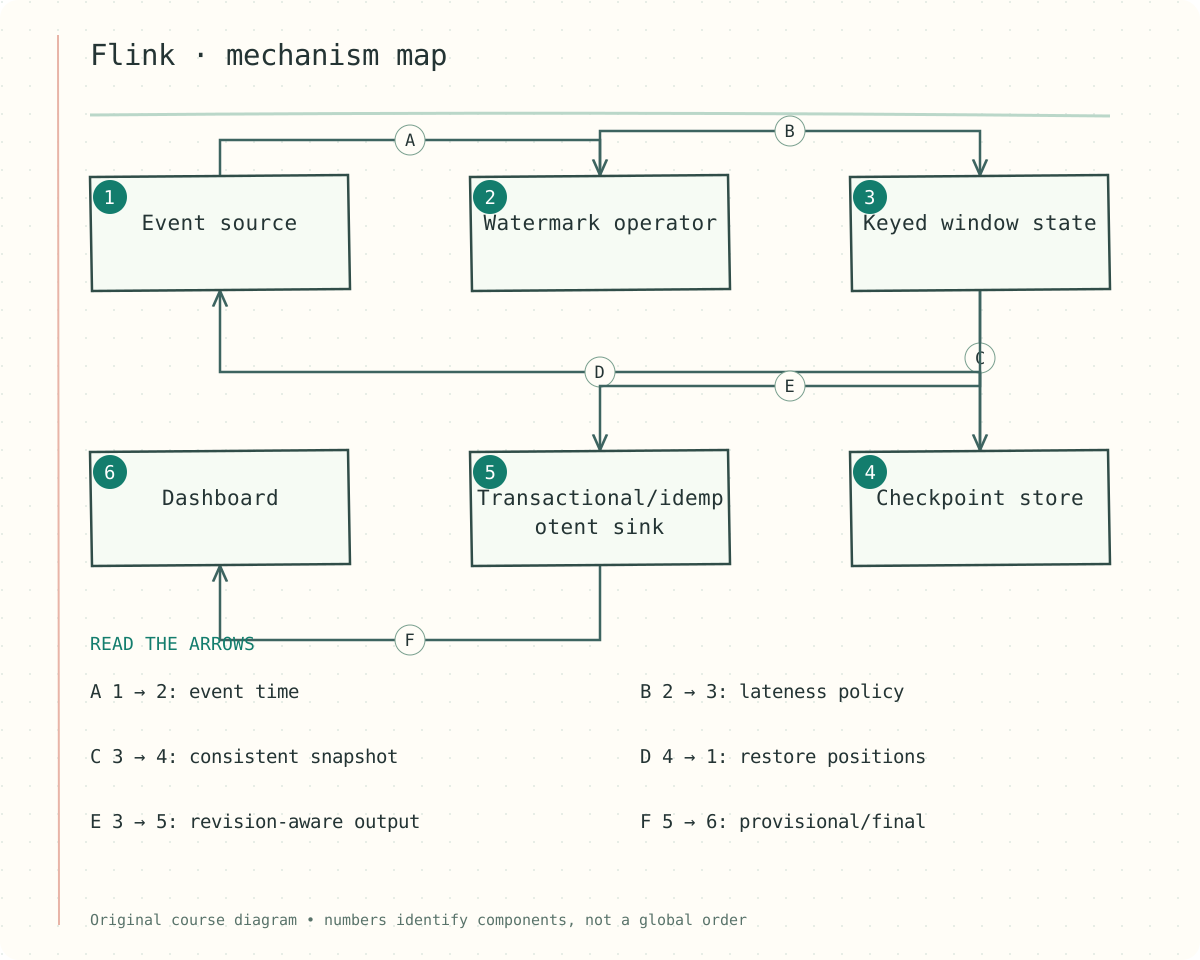
Figure — Event source → Watermark operator (event time); Watermark operator → Keyed window state (lateness policy); Keyed window state → Checkpoint store (consistent snapshot); Checkpoint store → Event source (restore positions); Keyed window state → Transactional/idempotent sink (revision-aware output); Transactional/idempotent sink → Dashboard (provisional/final)
The numbered components identify responsibilities. Follow the labeled arrows rather than treating the numbers as a global execution order. The scenario later in this lesson shows one concrete sequence.
Step-by-step reasoning
1. 1 · Frame
Specify source ordering, event time, allowed lateness, window type, state size, and output contract. Distinguish event time from processing time. A watermark estimates that events before a point are unlikely to arrive; it is a progress signal, not proof that late records cannot exist. Define whether late data is dropped, corrected, or sent to a side output.
2. 2 · Model
Operators hold keyed state, such as counts per campaign/window. Key choice determines state distribution and can create a hot subtask. Checkpoints snapshot consistent operator state and source positions under the selected checkpoint mode. State backends, serialization, checkpoint storage, and restore times influence operational capacity.
3. 3 · Scale
Choose parallelism based on partitions, per-key skew, state size, and sink limits. Backpressure propagates from a slow sink. Window retention and TTL should bound state, while savepoints or compatible state evolution support upgrades. Monitor watermark lag, checkpoint duration/failures, busy/backpressured time, state growth, and end-to-end event age.
4. 4 · Recover
A checkpoint captures the stream position and operator state. After a crash, the job restores both and reprocesses from the checkpoint. Exactly-once end-to-end output requires a sink protocol that participates in checkpoints or a sink operation that is idempotent. If a webhook fires outside that protocol, duplicate delivery is still possible.
Contracts and state
The following sketch makes the decision boundary concrete. Field names and capacity assumptions are illustrative; adapt them to the stated product contract.
Event(id, key, event_time, payload)
Watermark = progress estimate for event_time
Keyed window state: (key, window_start) -> aggregate
Checkpoint: source offsets + operator state
Output sink needs transactional commit or idempotency
Worked example
A campaign count closes at 10:05 with a five-minute allowed lateness. A click from 10:03 arrives at 10:07 and can revise that window while it remains retained. A click arriving after final state may be side-output, dropped, or reconciled by policy. The dashboard marks whether a number is provisional or final.
Failure walkthrough
A checkpoint succeeds but the job’s external notification sink sends an alert before the checkpoint commit and then retries after restore. The alert may duplicate. Use an idempotent alert key or a transactional sink compatible with checkpointing. Do not infer exactly-once external effects solely from a checkpointed source and state.
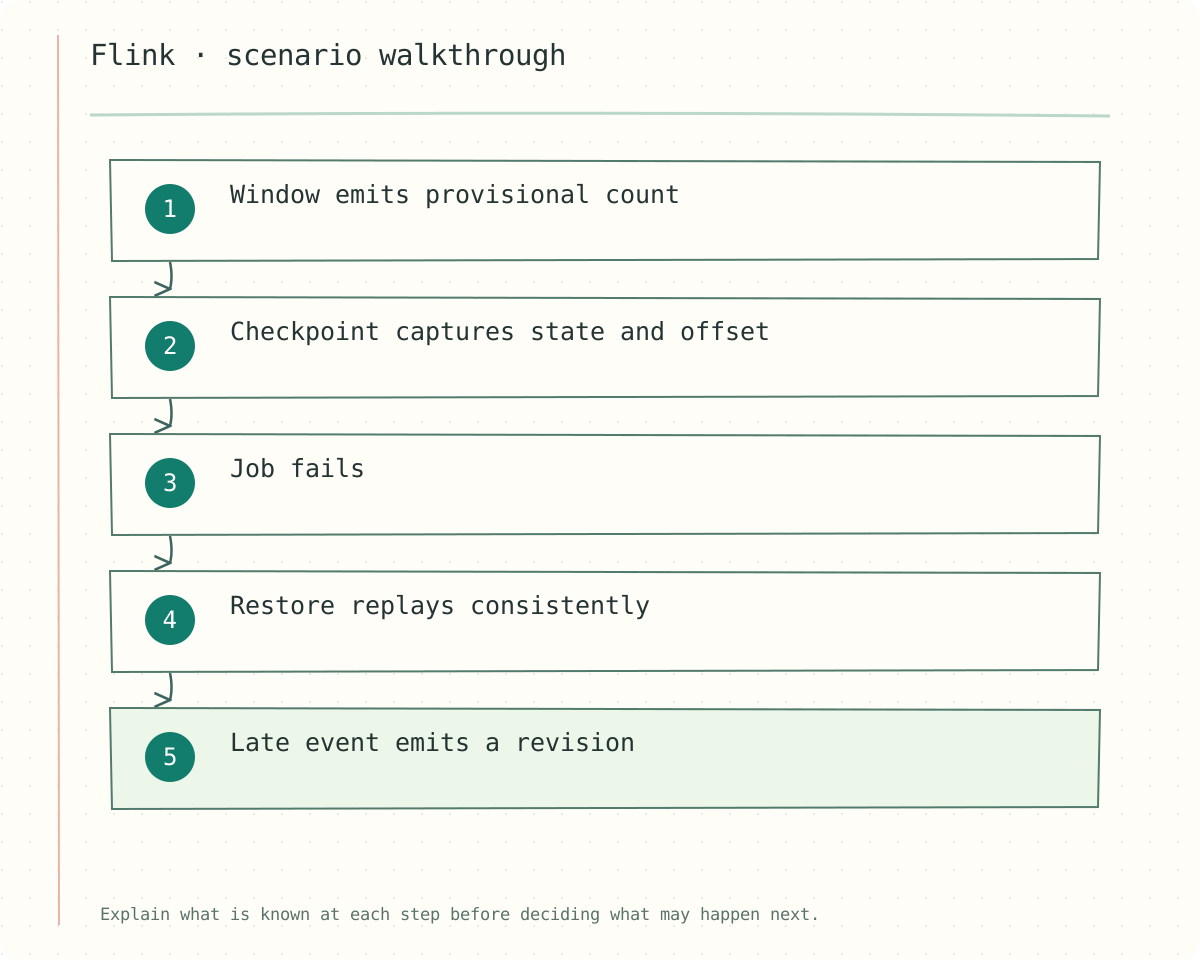
Figure — Window emits provisional count → Checkpoint captures state and offset → Job fails → Restore replays consistently → Late event emits a revision
Decisions and trade-offs
| Concept | What it does | Not a guarantee of |
|---|---|---|
| Watermark | Advances event-time processing | No later event can arrive |
| Checkpoint | Restores state and source progress | Any external API is atomic |
| Keyed state | Partitions per-key computation | Even work for skewed keys |
| Backpressure | Signals a downstream limit | Automatic scale without sink capacity |
Check your understanding
A late event revises an event-time window after its first output. How do consumers avoid treating the correction as a second independent count?
Show answer and explanation
Answer: Emit a versioned update or changelog/retraction semantics that consumers understand, rather than an unlabelled second increment. Keep a stable window identity and revision. Alternatively finalize after a stated lateness bound and route older events to reconciliation. Explain the downstream contract.
Primary documentation
Read the first-party engineering account or official technical reference. Company engineering posts describe the scope and date of that publication; the interview reconstruction and scenarios here are original teaching examples.
Continue the connection
Study Kafka and explain which guarantee from this lesson carries into that topic.
Follow event time through recovery
A stateful stream processor maintains keyed state while consuming an input stream. Event time comes from the event, processing time from the worker’s clock. Watermarks express progress assumptions and allow windows to close under a lateness policy; they are not proof that an older event can never arrive.
Checkpointing snapshots processing progress and state so recovery can replay consistently. End-to-end exactly-once behavior also depends on source replay and sink integration. A plain HTTP call to a provider is not made atomic just because internal state has a checkpoint. Use a transactional or idempotent sink contract and explain late corrections.
Key skew concentrates state and CPU. A campaign receiving half the traffic may need two-stage aggregation: salted partial counts followed by a merge. State grows with keys, windows and lateness, so choose retention and TTL deliberately. Backpressure moves upstream when a sink is slow; adding source throughput can worsen the problem.
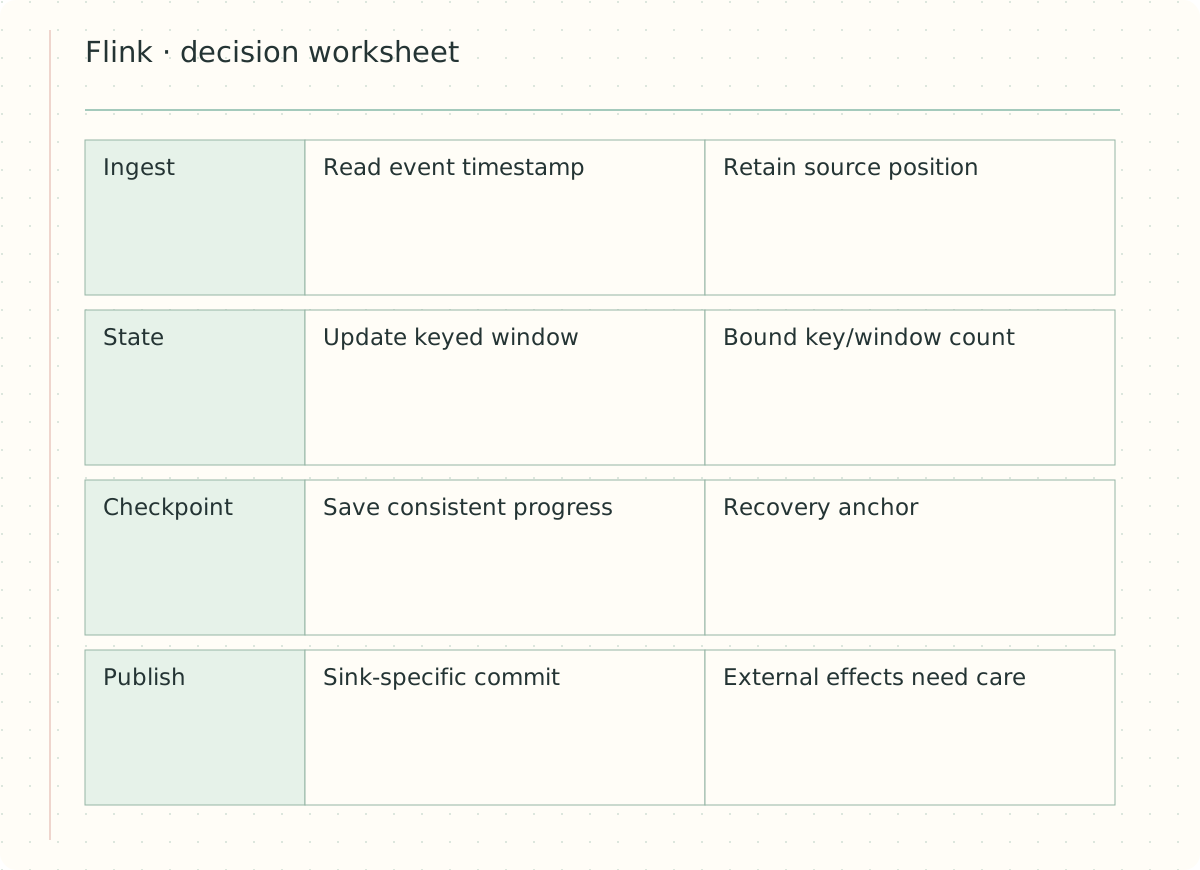
Figure — A decision worksheet for Flink: read the mechanism and its guarantee together.
Operational sketch
event_time -> keyed window state
watermark passes window end + allowed lateness
checkpoint records offsets + state
sink commits according to supported protocol
late events -> correction or side output
A tempting mistake
An idle input partition can hold back watermark progress unless the configured idle-source policy accounts for it. Dropping lateness to reduce memory changes result completeness.
Transfer exercise
Why can a checkpointed job still send duplicate emails?
Show answer and explanation
Answer: The email effect is outside the checkpoint transaction. A recovery can replay the activity; use an external idempotency mechanism or reconcile uncertainty.
A late event revises an event-time window after its first output. How do consumers avoid treating the correction as a second independent count?
Your design draft
Clarify assumptions, explain your approach, and test the difficult cases. Save your draft, then compare it with the study notes.
Self-review checklist
Self-guided practice. Automated AI feedback and code execution are not connected.