Quiz: CAP Theorem
Apply CAP Theorem to concrete decisions. Choose an answer for every question, then review the explanations.
Visual checkpoint
Use this diagram to locate the state and failure boundaries tested by the questions. Answer all five questions before revealing feedback; the result is a study checkpoint rather than a certification.
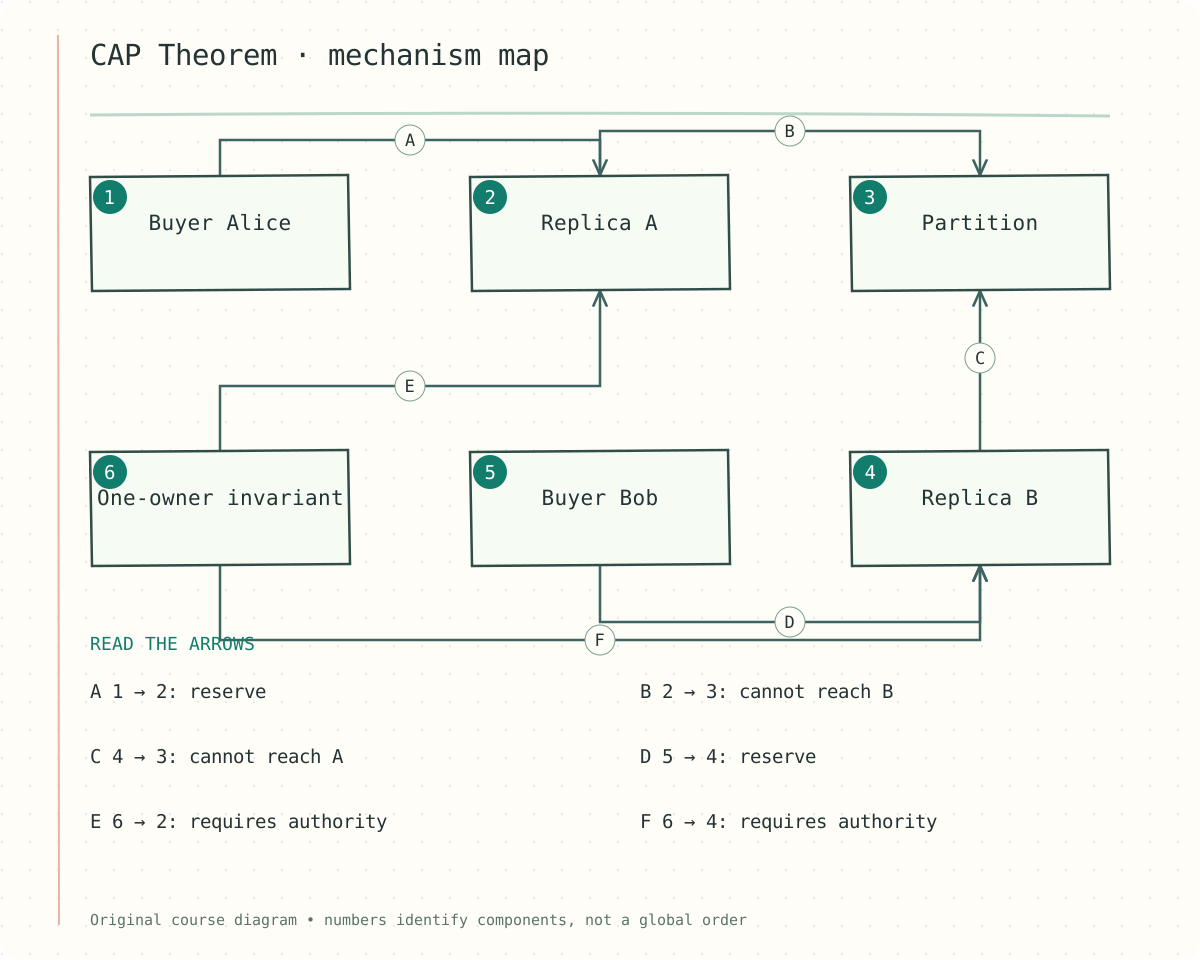
Figure — Buyer Alice → Replica A (reserve); Replica A → Partition (cannot reach B); Replica B → Partition (cannot reach A); Buyer Bob → Replica B (reserve); One-owner invariant → Replica A (requires authority); One-owner invariant → Replica B (requires authority)
Review your reasoning
After checking answers, identify the incorrect assumption behind each missed question. Rewrite it as a rule with a concrete exception or failure case, then return to the lesson.
Can both isolated replicas confirm the final seat and still guarantee that only one buyer owns it?
Answers and your latest score are saved to your account when you check them. Completion records your attempt, not a passing certification.