Quiz: Numbers to Know
Apply Numbers to Know to concrete decisions. Choose an answer for every question, then review the explanations.
Visual checkpoint
Use this diagram to locate the state and failure boundaries tested by the questions. Answer all five questions before revealing feedback; the result is a study checkpoint rather than a certification.
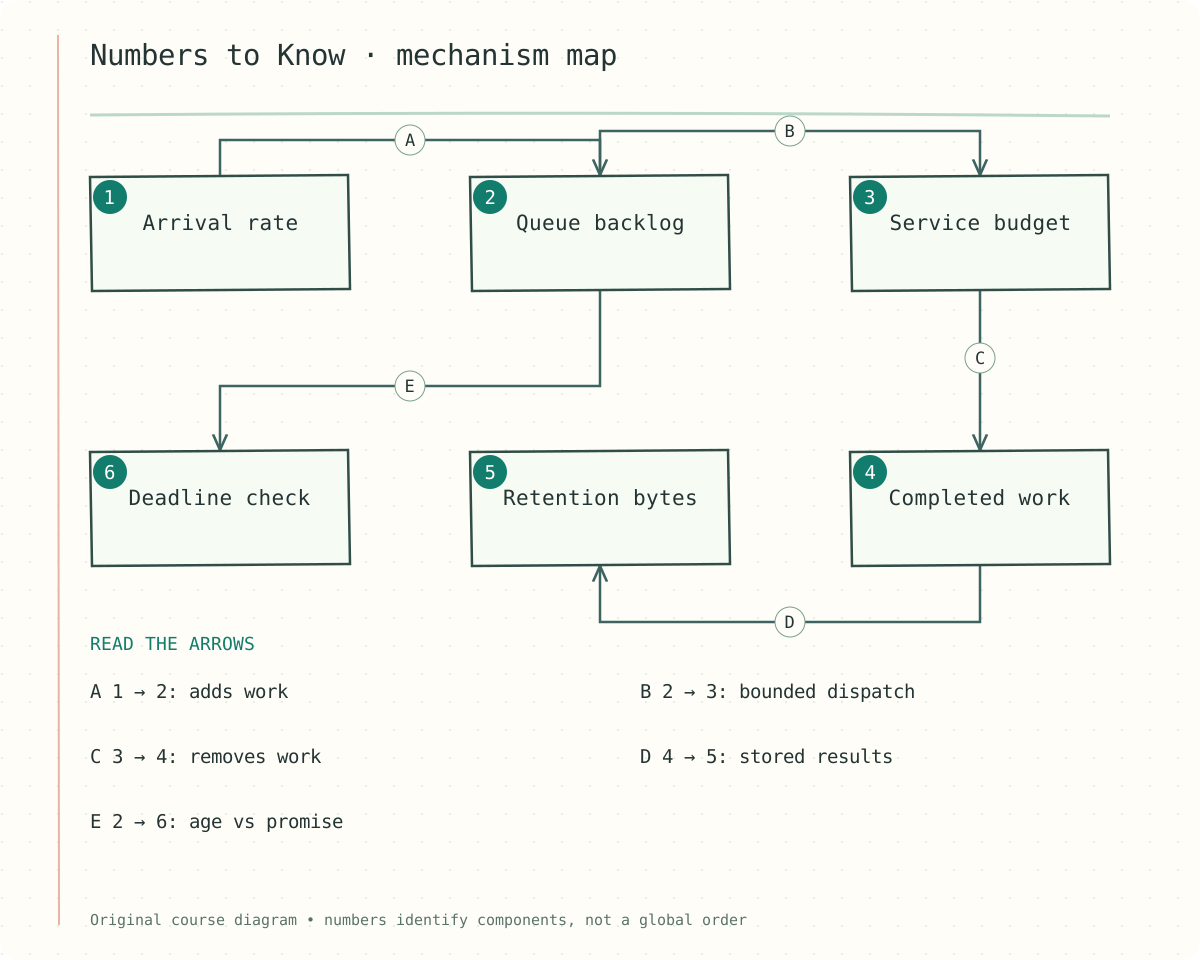
Figure — Arrival rate → Queue backlog (adds work); Queue backlog → Service budget (bounded dispatch); Service budget → Completed work (removes work); Completed work → Retention bytes (stored results); Queue backlog → Deadline check (age vs promise)
Review your reasoning
After checking answers, identify the incorrect assumption behind each missed question. Rewrite it as a rule with a concrete exception or failure case, then return to the lesson.
A queue contains 60,000 jobs, workers finish 500/s, and new work arrives at 300/s. How long to drain?
Answers and your latest score are saved to your account when you check them. Completion records your attempt, not a passing certification.